
3-2Design Fundamentals
Sep 9
📌 Complete before class
- 📌View Source
- 📚 Module 2.2 HTML and CSS (58-73)
- 📚 Module 2.3 JavaScript and DevTools (74-81)
- Codecademy: CSS 2-1 Visual Rules (10)
- Codecademy: CSS 3-1 The Box Model (17)
Learning Objectives
- Give and receive “Glow and Grow” peer critique using design intent and code organization as evaluation criteria.
- Articulate how specific CSS decisions (color, font, spacing) communicate meaning beyond decoration.
Javascript intro
Section titled “Javascript intro”- JS Introduction slides
C.R.A.P. introduction
Section titled “C.R.A.P. introduction”We already used the “Eye Movement Test” to discover how a design can lead our eyes around a layout. CRAP design principles illustrate why that happens:
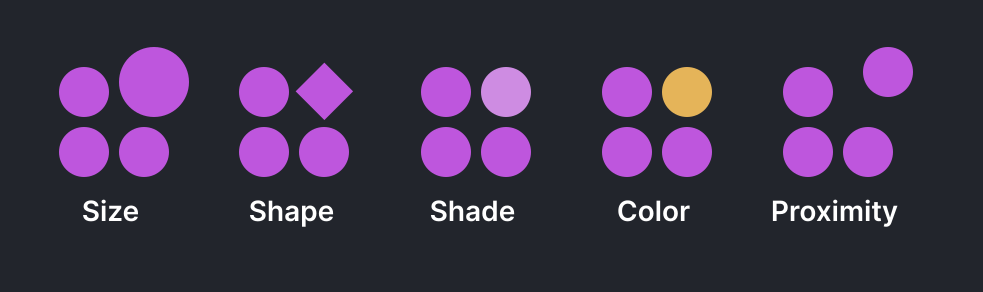
- Contrast - Make different elements clearly different (size, color, weight) so the eye knows what matters most.
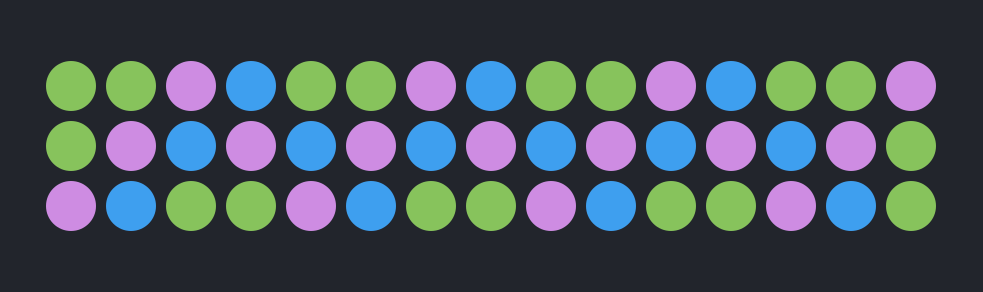
- Repetition - Repeat visual choices (colors, fonts, spacing) throughout a design so it feels unified. Treating similar content the same makes it easy to find information and navigate.

- Alignment - This is the spatial relationship between different elements. Line elements up with each other so nothing feels randomly placed.
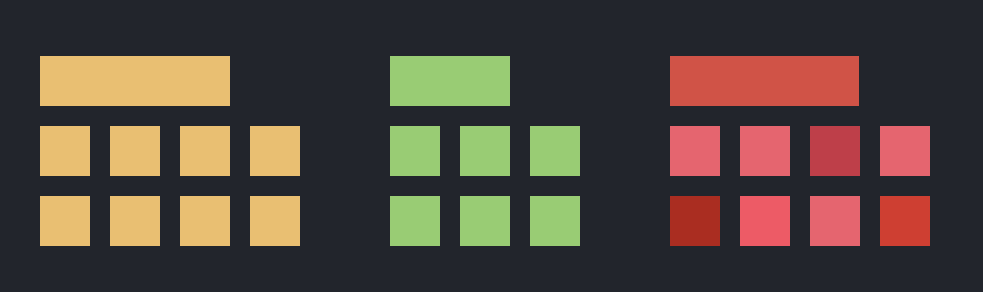
- Proximity - Group related items close together, and separate unrelated ones, to show relationships.
👉 View Source feedback
Section titled “👉 View Source feedback”- Share your View Source draft — push to GitHub and share the live link in Slack.
- Groups - Note one design principle you applied to your project — what did you intend, what was the visual effect?
- Articulate how specific CSS decisions (color, font, spacing) communicate meaning beyond decoration.
- Explore examples in these articles for more: How to Use C.R.A.P. Design links with Principles for Better UX? and 4 CRAP Design Principles For A Better UX
👉 Work during class
Section titled “👉 Work during class”- Finish your View Source project in class following the prompt in the assignment.
- Validate your live HTML page at validator.w3.org and CSS at jigsaw.w3.org/css-validator.
- What is one question you have after completing the first prompt / assignment? Post in Slack with the link to your finished project.
📌 Homework
- ❓Quiz 03 - HTML-2 Document Standards
- 📚 Ch 3 Critical Design - Context (83-90)
- Charli Marie Figma 101: An introduction tutorial (18:34)